
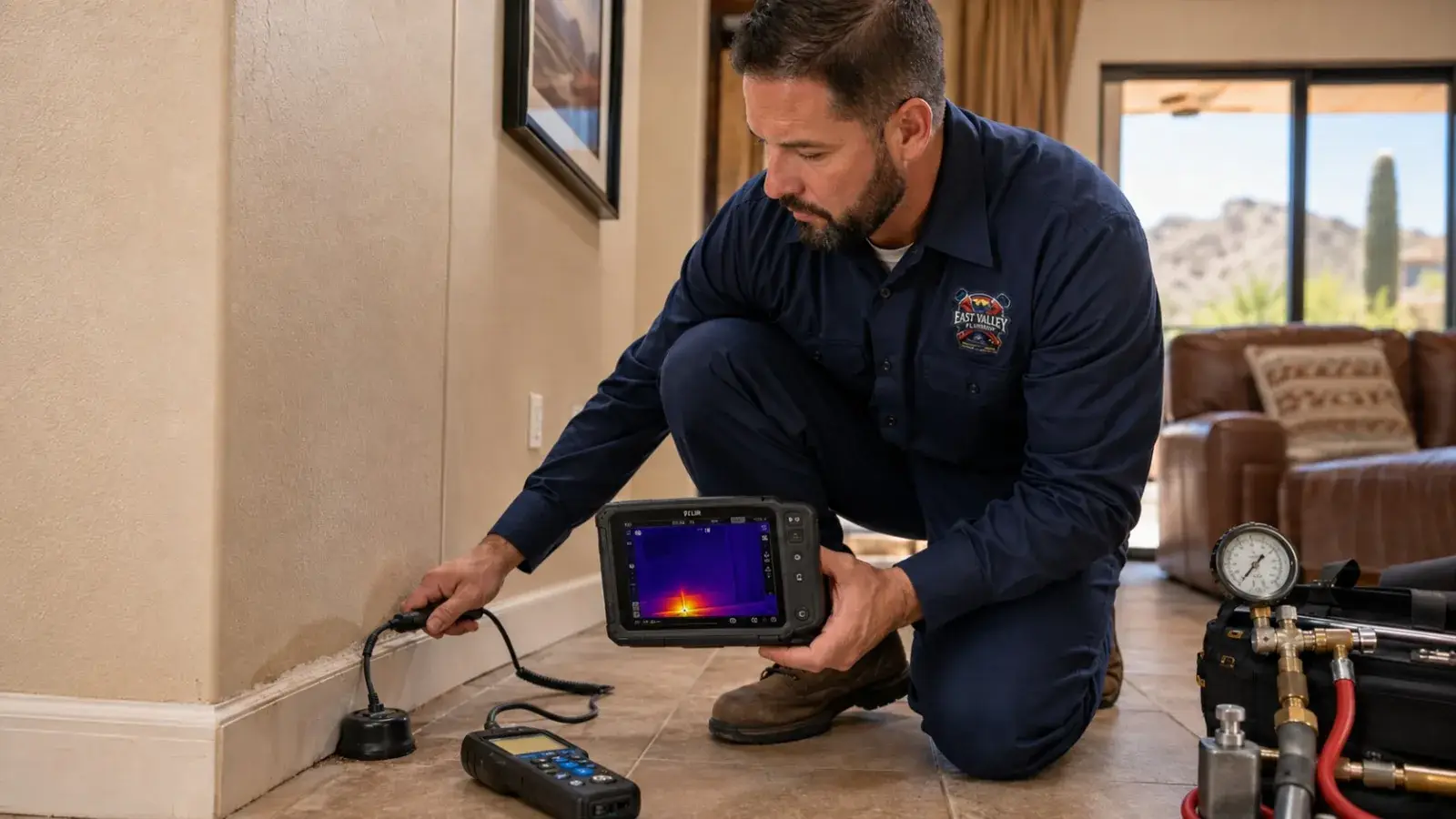
Why Plumbing Leak Detection Matters More in 2026
A plumbing leak rarely announces itself with a burst pipe. In many Arizona homes, it begins with a higher water bill, a damp baseboard, a warm floor, or a faint sound of running water when every faucet is off.
For homeowners across Apache Junction, Mesa, Chandler, Gilbert, and the East Valley, early leak detection is becoming a financial decision, not just a plumbing concern. The U.S. Environmental Protection Agency reports that household leaks waste nearly 1 trillion gallons of water nationwide each year, and the average household leak can waste more than 9,300 gallons annually.
In Arizona, the risk is sharpened by hard water, aging pipes, slab foundations, and shifting desert soil. Apache Junction Water District notes that Arizona and the desert Southwest have varying degrees of water hardness, while regional plumbing concerns often include mineral buildup, corrosion, and reduced fixture efficiency.
Professional plumbing leak detection uses visual inspection, pressure testing, acoustic tools, thermal imaging, and cameras to locate hidden leaks early.
Step 1: Start With the Warning Signs
Before equipment comes out, a plumber looks for the pattern. One slow drain may be minor. Several symptoms together may point to a hidden leak, a failing pipe system, or an under-slab plumbing problem.
There are two main types of slab leaks: water supply line leaks and sewer drain line leaks. Either type can cause serious under-slab damage if ignored. Over time, that damage may lead to foundation movement, moisture problems, structural concerns, and costly repairs.
Common leak warning signs include:
- Sudden water bill increases
- Low water pressure
- Damp flooring, carpet, or baseboards
- Warm spots on tile or concrete floors
- Mold or mildew odors
- Cracks in walls, flooring, or foundation areas
- Sound of running water when fixtures are off
- Recurring drain backups or sewer odors
- Unwanted pests inside the home
For slab-foundation homes, warm flooring, sewer odors, recurring backups, and unexplained water use deserve fast attention. A water line or sewer drain leak beneath concrete can continue for weeks before visible damage appears.
Step 2: Check the Water Meter and Pressure
One of the first leak detection steps is simple but important: the water meter test.
A plumber may shut off fixtures, check whether the meter continues moving, and compare pressure levels across the home. Pressure testing can help identify whether the problem is in the supply line, fixture branch, irrigation connection, water heater line, or underground piping.
If your water meter moves while all fixtures are off, your home may have an active hidden plumbing leak.
Step 3: Use Acoustic Leak Detection
Hidden leaks often make sound before they make stains.
Professional plumbers use acoustic listening equipment to detect the sound of pressurized water escaping from pipes behind walls, beneath floors, or under concrete slabs. This is especially useful when the leak is not visible but pressure loss or water use suggests a problem.
Acoustic detection helps reduce unnecessary demolition because the plumber can narrow the likely leak location before opening floors or walls.
Step 4: Use Thermal Imaging for Moisture Clues
Thermal imaging cameras do not "see" water directly. They detect temperature differences that may reveal moisture patterns, hot water line leaks, or damp building materials.
In Arizona homes, this is useful for:
- Slab leak detection
- Hidden wall leaks
- Ceiling moisture tracking
- Water heater line failures
- Bathroom and kitchen leak investigations
Thermal imaging is not a standalone diagnosis, but it gives plumbers a clearer map of where to investigate next.
Step 5: Inspect Drains and Sewer Lines With Cameras
When the issue involves recurring backups, sewer odors, or multiple slow drains, leak detection may shift from supply lines to sewer lines.
A sewer camera inspection can reveal:
- Root intrusion
- Cracked sewer lines
- Offset pipe joints
- Cast iron corrosion
- Orangeburg pipe collapse
- Grease and debris buildup
- Clay or terracotta pipe damage
For older East Valley homes, this matters because many sewer failures are hidden beneath driveways, landscaping, patios, and slab areas.
Step 6: Confirm the Repair Plan
After locating the leak, a professional plumber should explain the repair options clearly.
Depending on the damage, solutions may include:
- Targeted pipe repair
- Slab access and pipe replacement
- Pipe rerouting
- Drain cleaning or hydro jetting
- Sewer line repair
- Trenchless sewer replacement
- Whole-home repiping for deteriorated systems
The best repair is not always the cheapest immediate option. If old galvanized, cast iron, Orangeburg, clay, or failing transition pipes are involved, repeated patch repairs may cost more over time.
Why Waiting Costs More
A hidden leak can damage more than plumbing. It can affect drywall, flooring, cabinets, insulation, foundations, indoor air quality, and utility bills.
By 2026, homeowners are also facing higher labor, material, and restoration costs. Delaying leak detection can turn a targeted repair into a larger structural restoration project.
Call East Valley Plumbing Before the Damage Spreads
Leak detection is no longer guesswork. With acoustic tools, thermal imaging, pressure testing, and sewer camera inspections, plumbers can locate problems earlier and reduce unnecessary disruption.
If you notice rising water bills, damp flooring, low pressure, sewer odors, or recurring drain issues, schedule a professional inspection before the problem becomes expensive.
For expert plumbing leak detection in Apache Junction and Arizona's East Valley, contact East Valley Plumbing.
Noticing warning signs at home? Read Plumbing Repair in Chandler: Signs You Should Not Ignore.
Phone: (480) 255-7325
Address: 2205 S. Cactus Rd., Apache Junction, AZ 85119
Email: Evplumbingrepair@gmail.com
Frequently Asked Questions
How do I know if I have a hidden plumbing leak?
Rising water bills, damp floors, low pressure, mold odors, or running water sounds often indicate hidden leaks.
What is the best way to detect a water leak underground?
Professional plumbers use acoustic sensors, pressure testing, thermal imaging, and camera inspections to locate underground leaks.
Can a plumber find a leak without breaking concrete?
Yes, plumbers often use non-invasive tools to detect slab leaks before cutting concrete or flooring.
When should I call a plumber for leak detection?
Call a plumber when leaks cause high bills, damp areas, low pressure, odors, or recurring plumbing problems.