
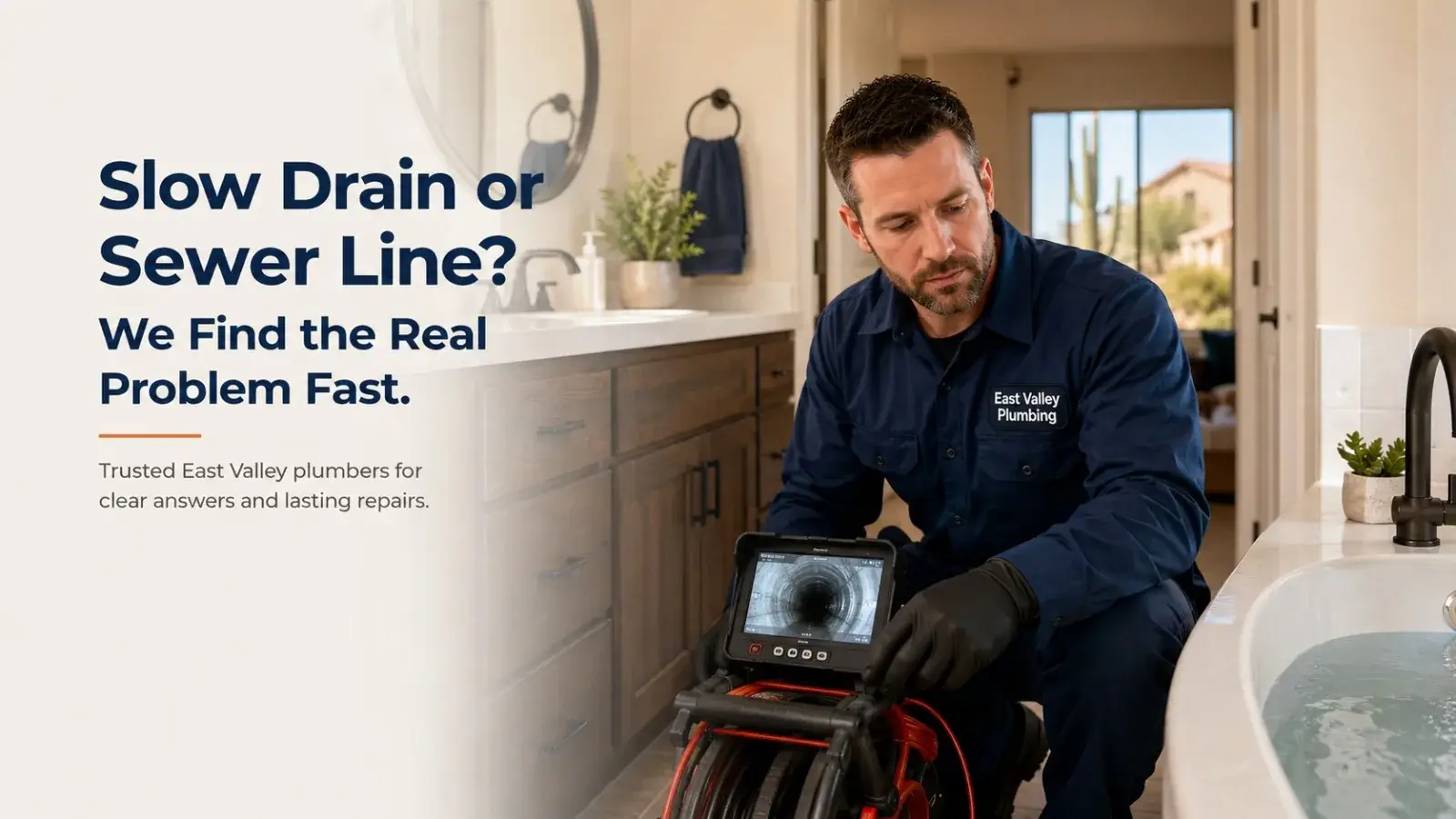
It often starts with something small: a shower draining slower than usual, a kitchen sink holding water, or a toilet making an unfamiliar gurgling sound.
Sometimes, the problem really is one clogged drain. But when several fixtures begin behaving strangely at the same time, the blockage may be deeper in the plumbing system, potentially a main sewer line clog.
Knowing the difference matters because a simple drain clog and a damaged sewer line require very different solutions.
One slow fixture usually suggests a local drain clog. Multiple slow drains or backups can indicate a main sewer line problem.
Clogged Drain vs. Sewer Line Problem: Watch Which Fixtures Are Affected
A clogged drain normally affects one fixture or one nearby branch of plumbing.
Typical signs include:
- One sink, shower, tub, or toilet draining slowly
- Standing water in a single fixture
- Localized drain odors
- A blockage that stays gone after professional clearing
Common causes include hair, soap residue, grease, food waste, debris, and mineral buildup.
A main sewer line clog, by contrast, can disrupt several fixtures because wastewater from different parts of the house eventually enters the same larger drainage line.
Warning signs include:
- Multiple drains slowing at once
- Toilets gurgling when sinks, showers, or washing machines drain
- Water backing up into a shower or bathtub
- Sewage odors coming from several drains
- Clogs that return shortly after being cleared
The EPA estimates that 23,000 to 75,000 sanitary sewer overflows occur annually in the United States, excluding sewage backups into buildings. Blockages, broken lines, and sewer defects are among the documented causes.
Why Recurring Drain Clogs Deserve More Attention
A drain that clogs once may simply need clearing. A drain that repeatedly clogs can be telling a different story.
East Valley Plumbing Repair identifies buildup, root intrusion, aging drains, shifted pipes, and damaged sections as problems that can cause recurring backups across Mesa, Apache Junction, Gilbert, Chandler, Tempe, and nearby communities.
Arizona homes can also face mineral accumulation inside plumbing lines. Over time, narrowing inside a pipe can make debris easier to trap and drainage increasingly unreliable.
A recurring clog may signal roots, heavy buildup, an offset joint, or structural pipe damage rather than a simple obstruction.
Sewer Camera Inspection Can Show What Drain Cleaning Cannot
When symptoms keep returning, repeatedly clearing the line without identifying the cause can become expensive.
A sewer camera inspection allows a plumber to examine the inside of the line and look for:
- Root intrusion
- Cracked or collapsed pipe
- Offset joints
- Heavy buildup
- Persistent blockages
- Areas where waste repeatedly collects
East Valley Plumbing Repair uses sewer cameras to locate blockages and structural problems before recommending options such as rooter service, hydro jetting, targeted repair, or replacement.
This diagnosis-first approach can also help avoid unnecessary excavation when the problem is limited to one section.
What Drain Cleaning and Hydro Jetting Cost in 2026
Costs vary according to access, pipe condition, blockage severity, and the service required.
Current Phoenix-area pricing data shows professional drain cleaning averaging about $191, with many projects falling between $104 and $290. Broader drain-cleaning projects can range considerably higher depending on complexity.
For residential sewer lines, hydro jetting in Phoenix typically costs about $362 to $620, with an average near $491 in 2026.
Hydro jetting uses high-pressure water to remove grease, sludge, and buildup from pipe walls. It is not automatically the correct solution for every damaged or weakened pipe, which is why inspection matters first.
Mesa Homeowners Are Responsible for Their Sewer Lateral
In Mesa, the sewer line serving a private property is called the lateral line. The City states that property owners are responsible for maintaining and cleaning that lateral, while the City maintains the public sewer main.
That distinction can become financially important when a suspected clog turns out to be pipe damage.
Mesa also moved to its 2024 International Codes on January 8, 2026, meaning projects submitted from that date fall under the city's updated building-code framework.
When a Sewer Line Problem Becomes Urgent
Do not treat the situation as an ordinary slow drain when:
- Raw sewage enters the home
- Several fixtures back up simultaneously
- Toilets repeatedly bubble or overflow
- Wastewater appears in tubs or showers
- The problem returns immediately after clearing
Sewage backups can damage flooring, drywall, cabinets, and belongings while creating potential public-health risks. The EPA specifically warns that sanitary sewer overflows can cause property damage and threaten human health.
Act Before a Slow Drain Becomes a Major Sewer Repair
Drain and sewer diagnostics are becoming more precise. Camera inspections, controlled rooter equipment, hydro jetting, and targeted repairs allow plumbers to determine what is happening before recommending major work.
That makes early diagnosis increasingly valuable.
One slow drain may be a local clog. Several slow drains, gurgling toilets, recurring backups, or sewage odors deserve a closer look.
East Valley Plumbing Repair provides drain cleaning, rooter services, sewer camera inspections, hydro jetting, and sewer repair across Mesa, Apache Junction, Gilbert, Chandler, Tempe, and surrounding East Valley communities.
If your drains keep clogging or several fixtures are backing up, contact East Valley Plumbing Repair for professional diagnosis before a manageable blockage becomes a larger sewer problem.
Not sure whether a problem is an emergency? Read how to know if you need an emergency plumber in Mesa or Apache Junction.
Phone: (480) 255-7325
Address: 2205 S. Cactus Rd., Apache Junction, AZ 85119
Email: Evplumbingrepair@gmail.com
Frequently Asked Questions
How do I know if my drain or sewer line is clogged?
If one fixture is slow, suspect a drain clog; multiple slow drains or backups usually point to the sewer line.
What are the first signs of a main sewer line clog?
Common early signs include gurgling toilets, several slow drains, sewage odors, and water backing up into tubs or showers.
Can a clogged drain cause a sewer backup?
A local clog usually affects one fixture, but a main-line blockage can force wastewater back through lower household drains.
When should I call a plumber for a clogged drain?
Call a plumber when clogs recur, multiple fixtures slow down, sewage appears, or plunging and basic cleaning do not work.