
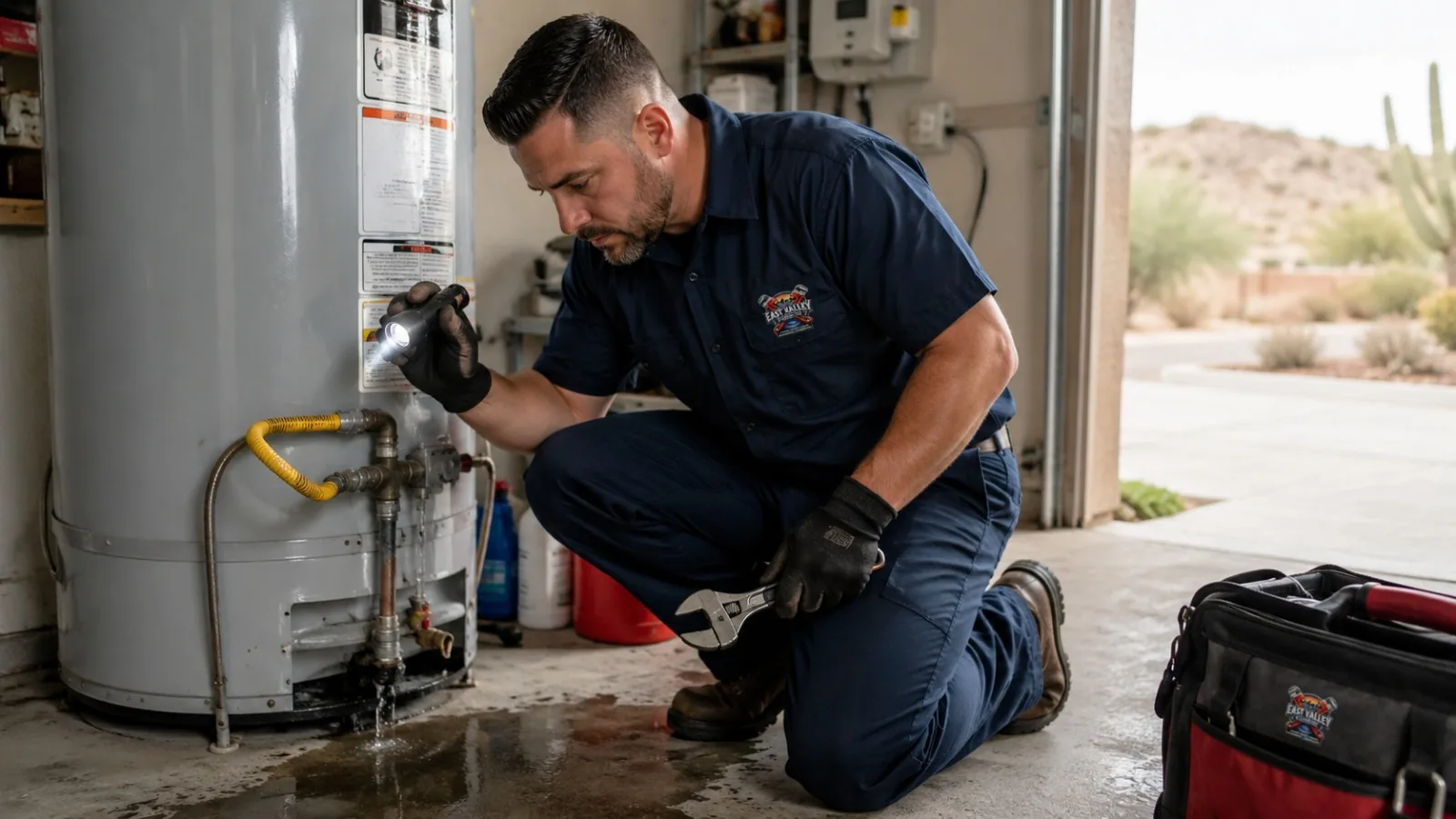
A plumbing emergency rarely begins with drama. More often, it starts with a sound behind the wall, a toilet that will not stop rising, a warm patch on the floor, or a water heater leaking quietly in the garage.
In Mesa, Apache Junction, and the wider East Valley, those small signs can turn serious quickly. Arizona homes deal with hard water, aging lines, high summer heat, slab foundations, and long stretches of dry soil that can shift around underground plumbing. East Valley Plumbing Repair lists emergency plumbing, leak detection, slab leaks, drains, water heaters, sewer lines, and fixture repairs among its core local services.
Knowing when to call an emergency plumber is simple: act when water, sewage, gas, or hidden leaks threaten property damage or household safety.
When to Call an Emergency Plumber: Is Your Problem an Emergency?
A plumbing emergency is not simply an inconvenience. It is a problem that can damage the home, create health risks, or become more expensive if delayed.
Call a professional urgently if you notice:
- Water spreading across floors, walls, cabinets, or ceilings
- Sewage backing up into tubs, toilets, or drains
- A burst pipe or uncontrolled leak
- No hot water in a household that depends on it
- A strong sewer smell inside the home
- A suspected slab leak under concrete
- A leaking or failing water heater
- A gas line concern or unusual gas odor
The U.S. EPA's WaterSense program says household leaks can waste nearly 1 trillion gallons of water annually nationwide, and the average household can lose more than 9,300 gallons a year from leaks.
Slab Leak Signs in Mesa and Apache Junction Homes
A slab leak is one of the most urgent plumbing problems because the damage is often hidden below the concrete foundation.
Watch for:
- Warm floor spots
- Damp carpet or flooring
- Low water pressure
- Higher water bills
- Musty odors
- Cracks in flooring or baseboards
- Sound of running water when fixtures are off
East Valley Plumbing Repair's own FAQ notes that warm floors, higher water bills, low pressure, damp smells, and unexplained wet areas are common slab leak warning signs.
A warm floor, rising water bill, or damp smell may signal a slab leak under the foundation.
Sewer Backups and Drain Emergencies
A slow sink may wait. A sewer backup should not.
When several drains slow down at once, toilets gurgle, or sewage appears in showers or tubs, the problem may be deeper than a simple clog. It can involve the main sewer line, tree roots, pipe collapse, grease buildup, or damaged underground piping.
Emergency drain and sewer issues matter because wastewater can expose families to bacteria, odors, and property contamination. East Valley Plumbing Repair says it handles clogged pipes, slow drains, camera inspections, sewer line repair, trenchless options, and excavation when needed across Mesa, Apache Junction, Gilbert, Chandler, Tempe, Queen Creek, and nearby areas.
What to Do Before the Plumber Arrives
Before an emergency plumber reaches your home:
- Shut off the main water valve if water is spreading.
- Turn off the water heater if it is leaking.
- Avoid using toilets, sinks, or showers during a sewer backup.
- Keep children and pets away from contaminated water.
- Take photos for insurance records.
- Do not open walls or floors unless told to do so.
For hidden leaks, EPA recommends checking the water meter before and after a two-hour period when no water is being used; if the meter changes, there may be a leak.
How Much Can an Emergency Plumber Cost in 2026?
Emergency plumbing costs depend on timing, access, parts, and severity. HomeGuide's 2026 cost guide estimates emergency plumbers at about $100 to $350 per hour, with after-hours, weekend, and holiday work often higher. Angi's cost data puts most emergency plumber calls between $100 and $500, and emergency rates typically run 1.5 to 3 times standard plumbing rates.
That is why early action matters. A small leak found today may cost far less than flooring damage, drywall repair, mold remediation, or foundation-related repairs later.
Why Local, Licensed Help Matters
In Arizona, homeowners can verify a contractor's current license through the Arizona Registrar of Contractors search portal. That matters during emergencies, when rushed decisions can lead to poor workmanship or unnecessary repairs.
A qualified emergency plumber should explain the diagnosis, provide clear options, use the right tools, and test the repair before leaving. Modern plumbing diagnostics may include pressure testing, acoustic listening, sewer cameras, and targeted leak detection instead of unnecessary demolition.
Do Not Wait for a Small Sign to Become a Major Repair
The future of plumbing repair is moving toward faster diagnostics, better leak detection, and less invasive repairs. But technology only helps when homeowners act early.
If you are in Mesa, Apache Junction, or the East Valley and notice water spreading, sewage backing up, a possible slab leak, or a failing water heater, contact East Valley Plumbing Repair for professional emergency plumbing help before the damage grows.
Phone: (480) 255-7325
Address: 2205 S. Cactus Rd., Apache Junction, AZ 85119
Email: Evplumbingrepair@gmail.com
Frequently Asked Questions
What qualifies as a plumbing emergency?
Flooding, sewage backups, burst pipes, gas smells, and slab leaks require emergency plumbing help immediately.
How do I know if I have a slab leak?
Warm floors, rising water bills, damp smells, low pressure, or running-water sounds may indicate slab leaks.
Is a sewer backup an emergency?
Yes, sewer backups are emergencies because contaminated wastewater can damage property and create health risks.
What should I do before an emergency plumber arrives?
Shut off water, avoid affected fixtures, keep people away from wastewater, and document visible damage.